
Junior Cycling Development: Mac Tomkins’ Ascent

Introduction
Mac and I started our coach-athlete relationship shortly after he attended a USAC junior cycling development camp. The camp was a great place to start, to help riders identify their level, start to learn how to train effectively and give them guidance on where to go from here. Mac came to camp without much experience training for cycling, but he proved to be an exceptional bike handler and highly motivated to see improvement and gain experience.
Building the Engine: Year 1 of Coaching
When Mac and I first started working together, he was racing age 16 and with the majority of his race experience coming in the form of SoCal League High School mountain bike racing. Mac had never followed a structured training plan and was currently only using heart rate to measure training stress. The goal wasn’t to win races right away, it was to make him a better athlete year after year and get him on the junior cycling development path.
We bean by focusing on the fundamentals of junior cycling development before focusing on the details of a training plan. Our main focuses were: improve Mac’s aerobic base and build training consistency through training frequency and volume. We increased Mac’s weekly volume from about 8-10 hours, to 12+ hrs a week. Another focus was nutrition. Mac learned the value of fueling both on and off the bike, matching carb intake to his fueling needs on the bike and tracking macros to make sure he was fueling adequately on the bike.
The caloric intake for a junior athlete is quite high, not only does the athlete need to support sport recovery but also provide excess calories to continue to grow and develop. At this stage of junior cycling development, nutrition is focused on proper fueling and recovery, whereas weight loss and a caloric deficit is really not even touched upon. Recovery was heavily emphasized as well, teaching Mac that training is the stimulus but adaptation does not occur unless recovery follows the stimulus. Finally, learning to balance training with a full school load is one of the biggest challenges for coaching a junior athlete.

Rapid Growth
Mac used heart rate to track fitness progression and that is the metric we used to learn how to train, track improvement and learn how his body responds to different workloads. Six months into training, Mac started using a power meter and we started to be a bit more specific with our training plan. Earlier 2024 Mac performed a 20 minute power test and averaged 271 watts, already a great improvement from where we started. Now at a racing age of 17 it was time to begin the next stage of his junior cycling development. We started to turn our focus from “training to survive” to “training to win.” Our focus was mostly local, with a variety of distances and disciplines from short track mountain bike to gravel races that were 5+ hours long. I wanted to keep Mac’s program as diverse as possible to grow a large skillset and not to not typecast himself into only 1 specific race role.
Year 2: From Strong to Strategic
Year two of working together during Mac’s junior cycling development saw Mac’s training plan start to evolve to be more specific. He was finding his niche and what he really wanted to focus on. In the offseason of 2024-2025, we started to put more emphasis on training for XC mountain bike races, as well as long gravel races such as BWR California. These goals would require a good mix of physical attributes, such as being punchy enough in the 1-5 minute range to compete in 60 minute long XC races, as well as 6+ hour gravel races that required tons of sustainable power in zone 3 and 4.
This would require careful planning and periodization to focus on improving VO2 max and Mac’s ability to improve power in the 3-5 minute range, as well as lots of time at tempo and sweet spot to improve Mac’s ability to ride at a high percentage of FTP for long periods of time. Most of Mac’s early season goals revolved around XC mountain bike racing and as the year progressed, he would do longer mountain bike and gravel races. We took a reverse periodization approach and performed an early season VO2 max block to get ready for the XC mountain bike season and would later turn our focus to extending out TTE (time to exhaustion). We also introduced race simulation work and strength training off the bike. Mac is incredibly self motivated, so a lot of the time I would have to slow him down a bit in favor of long term progression.
Breakthrough Performances
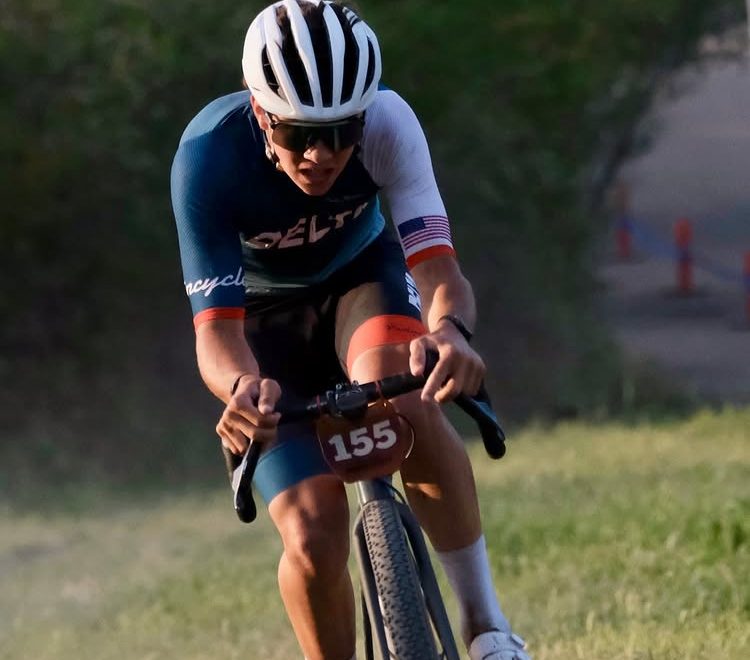
In April of 2025, Mac pushed 325 watts for 20 minutes during an FTP check, amounting to a 20% increase in 20 minute power in a 14 month period. For perspective, this is about 5.15 w/kg, moving Mac from the “has potential/mid level cat 3” up to “exceptional/national contender/good cat 2” on the charts. He also improved every other metric, from 5 second power to 3 hour power, as well as his durability. His improvements notched him notable results such as 2nd at BWR San Diego in the junior 17-18 category as well as 5th in the varsity finals in the SoCal mountain bike league. We aimed to qualify for mountain bike nationals, but Mac’s lack of UCI points had him starting towards the back in every XC race and ultimately he was unable to qualify.
As Mac continues to train, we continue to learn more about his strengths and limiters. My current modeling in WKO5 classifies his rider type as all-arounder, but he tends to exceed (and enjoy) the longer events more. For the second half of the year we will turn our attention towards peaking for gravel nationals and progressing towards Mac’s next goal of racing in the U23 division of the Lifetime Grand Prix.

Mac’s Perspective
I first met Taylor at a USAC Athlete Development Pathway (ADP) camp in 2023, and at the time I was fairly new to structured training. A little while after that I started working with him as my coach. Going in I knew very little about training and was just hoping to learn as much as I could to get faster on the bike. Taylor has taught me a ton about what goes into being a high level cyclist, and I’ve felt very supported by him the entire time we have worked together. Since starting with him I have put over 40 watts on my ftp, and have gotten to be a podium contender at the SoCal League varsity mountain bike races. He has helped me as I jump into national level races, ensuring I show up as prepared as possible. He has also been very flexible around my schedule and my goals, which has allowed me to train as optimally as possible while still maintaining that fun for the bike that got me into it in the first place.
Looking Ahead: Gravel Nationals and Beyond
As the 2025 season comes to a close, Mac has the Gravel National Championships up next on the calendar. This will be Mac’s last race as a junior and his final opportunity to showcase his junior cycling development before graduating to the U23 ranks. It will be really important that we implement everything the season has taught us thus far and aim for a podium placing to round out the year. As Mac and I continue to work together, the training will continue to evolve as Mac’s goals change and as his fitness level changes. Mac has penciled in the goal of competing in the U23 Lifetime Grand Prix competition in the years to come. This is a highly ambitious goal and if we are going to achieve it, we will have to continue to seek long term progress and year over year improvements.
Closing Thoughts: What Mac’s Journey Teaches Us
Working with Mac the last two years has taught me a lot about coaching juniors and junior cycling development. My biggest goal when working with a junior is to not burn them out. Cycling is an aerobic sport and aerobic development takes a long time, years not months. I have learned to tailor Mac’s training to incorporate the type of riding he enjoys. For juniors, an enjoyment factor is very important for continual improvement and motivation.
Something else I have learned when working with highly motivated individuals, is that sometimes an athlete's motivation can be their own undoing. Just because an athlete wants to continue to push and increase load does not mean it is best for improvement or long term development. Learning to balance recovery is really important for Mac, as his capacity for work is extremely high, but sometimes the load catches up, especially when combined with a heavy travel and race schedule.
When it comes to coaching junior cycling development, being patient is paramount. Focus on skills, fundamentals and being a really good athlete. Set healthy habits around fueling, both off and on the bike, talk about the importance of rest and good quality sleep and highlight when an athlete might be burning the candle at both ends during a stressful period of school. As an athlete physically matures and develops, they will get stronger, don’t overload too much, too soon.
About the Coach
Taylor Warren has raced at the elite level since 2014 and graduated with a Bachelor's Degree in Exercise Physiology from Colorado State University in 2015. Taylor continues to race at the elite level with CS Velo Racing, gaining experience and wisdom to help impart to the athletes he works with. Taylor is also a student of the game, with a passion for human performance and physiology, he is able to combine his race experience with an understanding of how the human body responds to training to deliver the best possible coaching experience. Taylor believes in a practical, holistic approach to coaching and training that values the athlete’s lifestyle and understands how to make the process approachable and enjoyable.
Learn more about Taylor and Source Endurance here.