
Using Performance Testing to Shape Your Training

Performance testing is how we evaluate our strengths and weaknesses, what’s overdeveloped and underexpressed. It’s not a judgement, it’s a compass. As a coach, I don’t believe in religiously prescribing power tests to my athletes, but following a period of transition, testing can be quite useful. Testing an athlete’s physiology, whether in the lab or in the field can give me helpful data points to decide how to structure training.
Performance Testing in the Lab
When I refer to testing an athlete, two options come to mind. Option one is getting into a performance lab and “seeing what’s under the hood” so to say. There is a ton of benefit in the insight an athlete can gain from lab testing. Specifically pinpointing VO2 max, LT1, LT2 and fraction utilization when first starting a training block can eliminate a lot of the guesswork in terms of setting training zones and framing goals.
Performance Testing in the Field
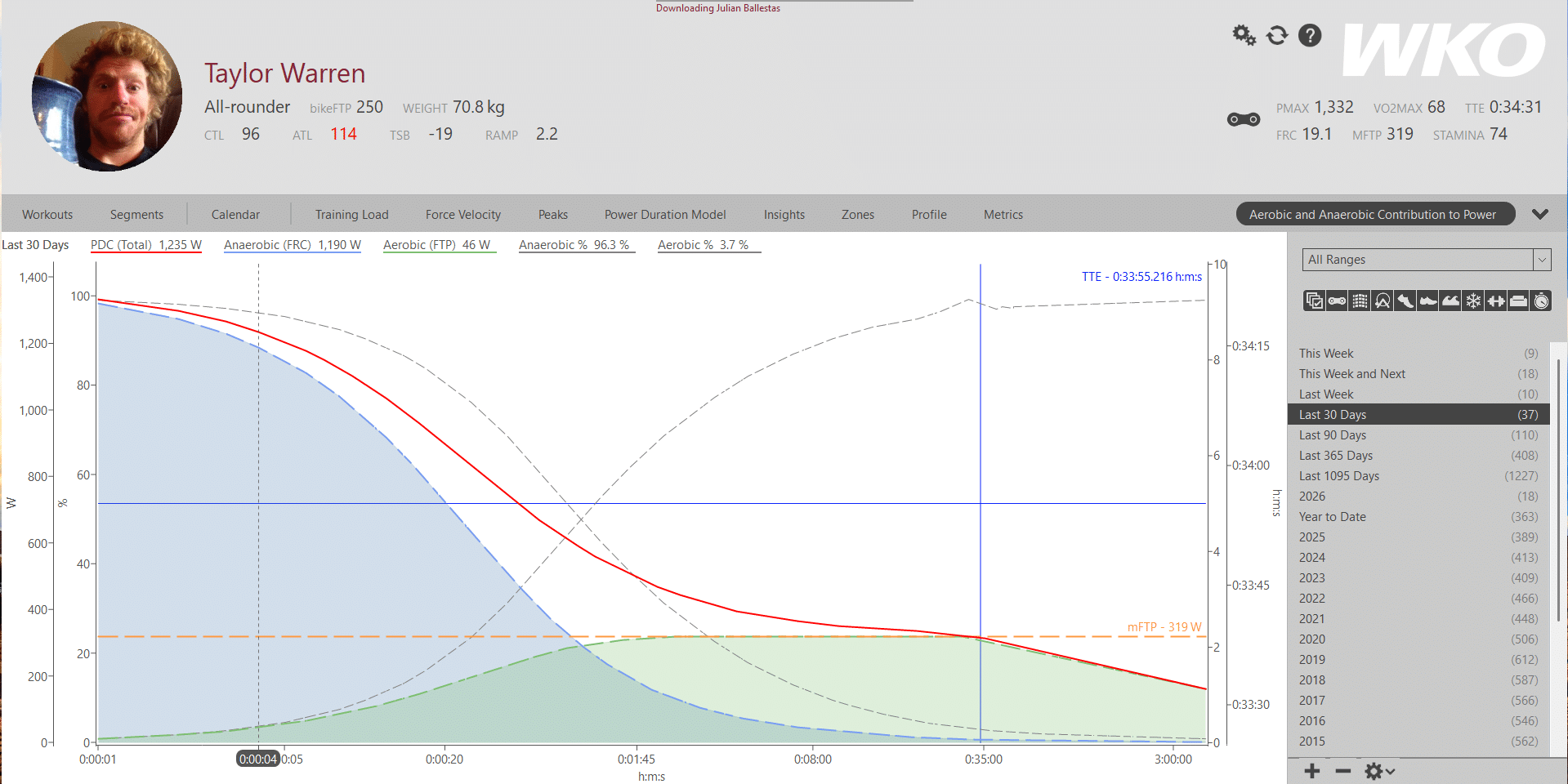
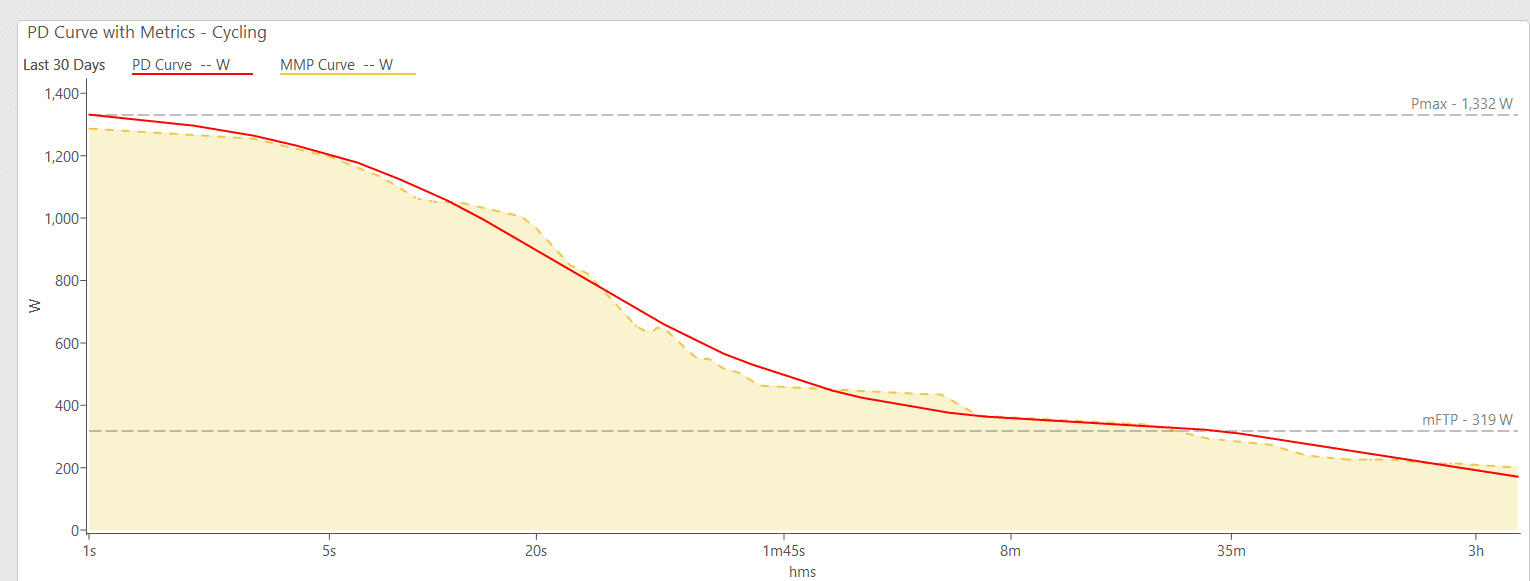
Field performance testing is specific duration power testing to help coaches build a metabolic profile for an athlete. I usually have athletes test 1’, 5’, and 20-30’ power to get a sense of a rider's anaerobic ability, their VO2 max, and their FTP. Almost equally important is that with these data points (short, medium, long), I can build a power duration curve for an athlete (at least the start of one) and also see how a rider is producing power.
Performance Testing: Lab vs Field
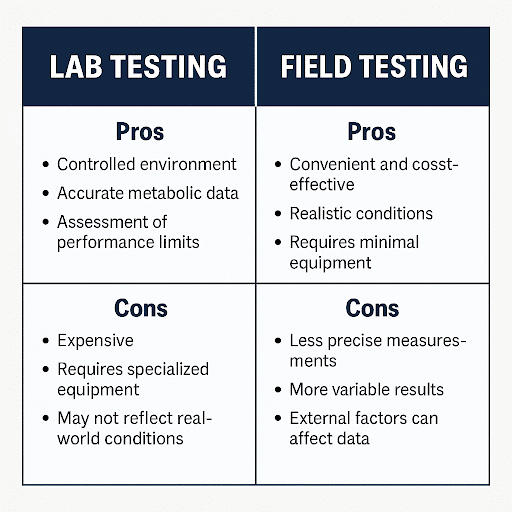
If you have the time, money and resources, I would do both. Lab testing gives you insights that are harder to pinpoint with field testing, such as lactate levels, LT1, substrate utilization data, just to name a few. Field testing is much more practical and can be repeated throughout the course of a season much easier. Let’s look at the pros and cons of each:
Interpreting the results
The different performance testing results yield data with different uses. What matters is how you use the newfound data. Ideally whatever method you decide upon, you can use the information to make high level training decisions about what to focus on and what might be holding you back. Testing 1’, 5’ and a longer sustained effort upwards of 30’+ can give you (or your coach) good insight into your physiology. I’ll use myself as an example as I just just tested these power values (20”, 5’ and 20’)
-20” at 967
-5’ at 435
-20’ at 339
I tested all three of these efforts within a short time frame, over 2-3 weeks but came into each effort fresh so fatigue wouldn’t affect results (this is suggested for field and lab testing). This helped me “feed” the model and build out a power duration curve and a modeled FTP of 319. Based on my 20” and 5’ power, WKO5 calculated my anaerobic system is contributing 5% of the workload during a 20’ effort. Theoretically if my 20” power went up (or FRC in general), my 20’ power would also increase. Having my athletes do periodic power tests help me figure out how their power increased (was it due to increase in anaerobic or aerobic ability or a combination of the two).
Getting in the Lab
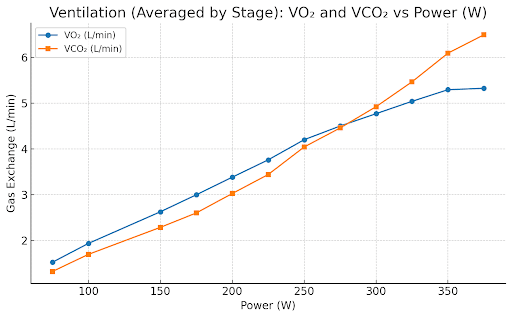
Source Endurance partners with the SDSU lab to conduct performance testing consisting of VO2 max and lactate testing for athletes. Getting ventilatory data as well as lactate data can be really beneficial, and at worst, incredibly interesting. Oftentimes FTP found in the lab and modeled FTP from field testing can be very similar but the lab offers a few aspects of physiology that are really hard to pinpoint in the field.
Fractional utilization:
This is the percentage of VO2 max an athlete is at when they reach FTP, essential tells you how close your FTP is to your aerobic ceiling
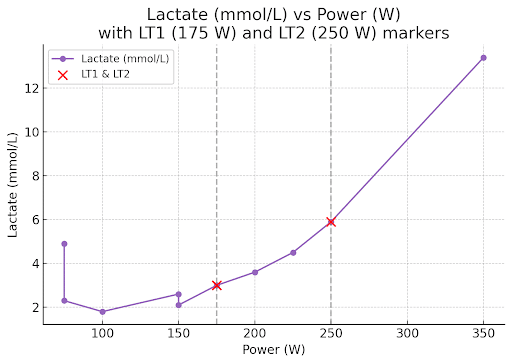
LT1:
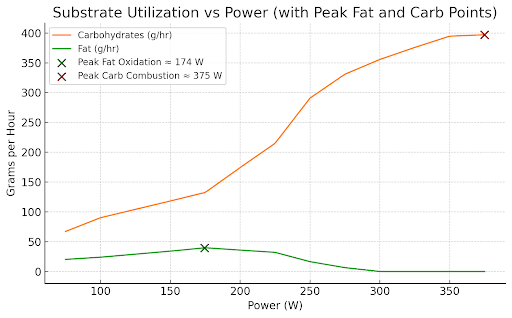
Also known as the aerobic threshold, is the point at which lactate starts to accumulate above baseline, indicating that fat oxidation has peaked and carbohydrates are contributing at a higher percentage. Oftentimes this physiological breakpoint signifies the top of an athlete's “zone 2” or endurance range.
Substrate utilization:
How much fat vs. carbs you are burning at different intensities. This can be used to dial in fueling strategies for racing, as well as get insight to how metabolically efficient an athlete is.
What’s the bottom line
The bottom line is that it doesn't necessarily matter how you are performance testing as long as you are getting accurate results that you can apply to your training based on your goals. Think of these results as setting a baseline, afterwards implement a training protocol to improve a certain aspect of your physiology and then retest. Did you improve what you wanted to?? Why or why not. This is a big part of coaching using sports science.